
Professional Drying Services
- Drying services include:
- Industrial air movers
- Professional dehumidification
- Moisture monitoring
- Structural drying assessments
Controlled Property Drying
Our trained technicians use specialist drying equipment to remove residual moisture following a leak, escape of water or flood. Controlled drying can help protect building materials from further deterioration and reduce the risk of mould growth.
Drying a Property After Water Damage
After a leak or flood, moisture can remain trapped within walls, floors, ceilings, insulation and other building materials even after the visible water has been removed. Without suitable investigation and drying, this residual moisture may continue to affect the property.
Our technicians assess the affected areas and take moisture readings to help establish the extent of the water damage. The findings are then used to plan an appropriate drying approach for the materials and construction involved.
Structural Drying Equipment
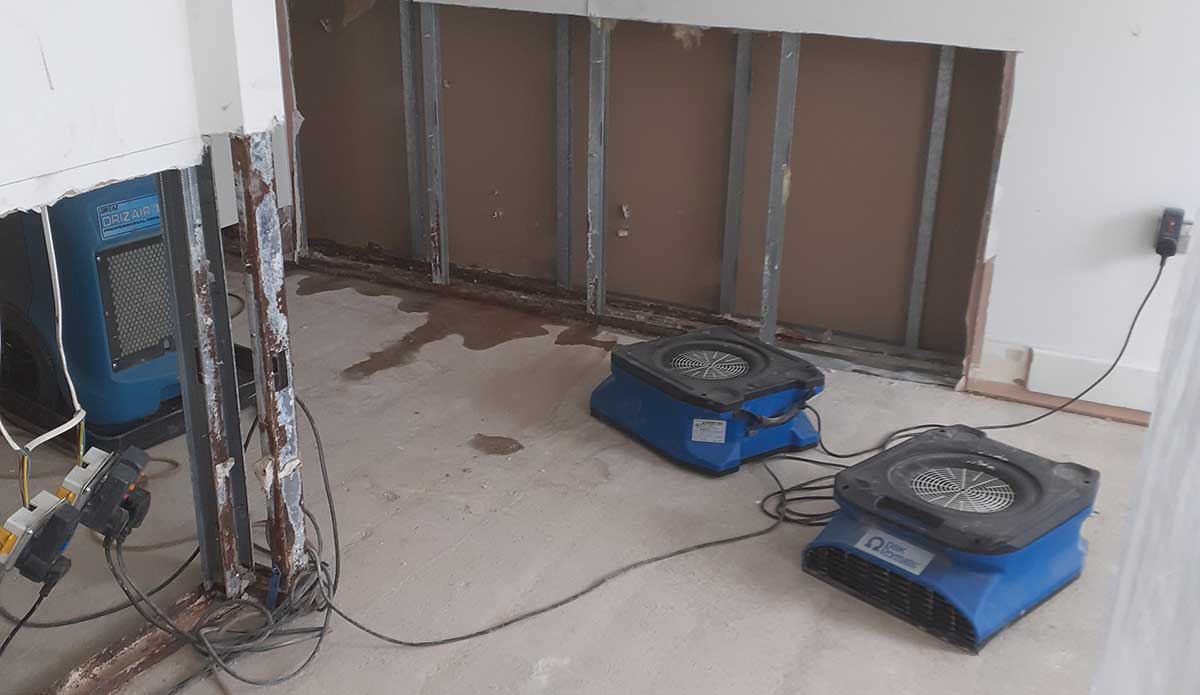
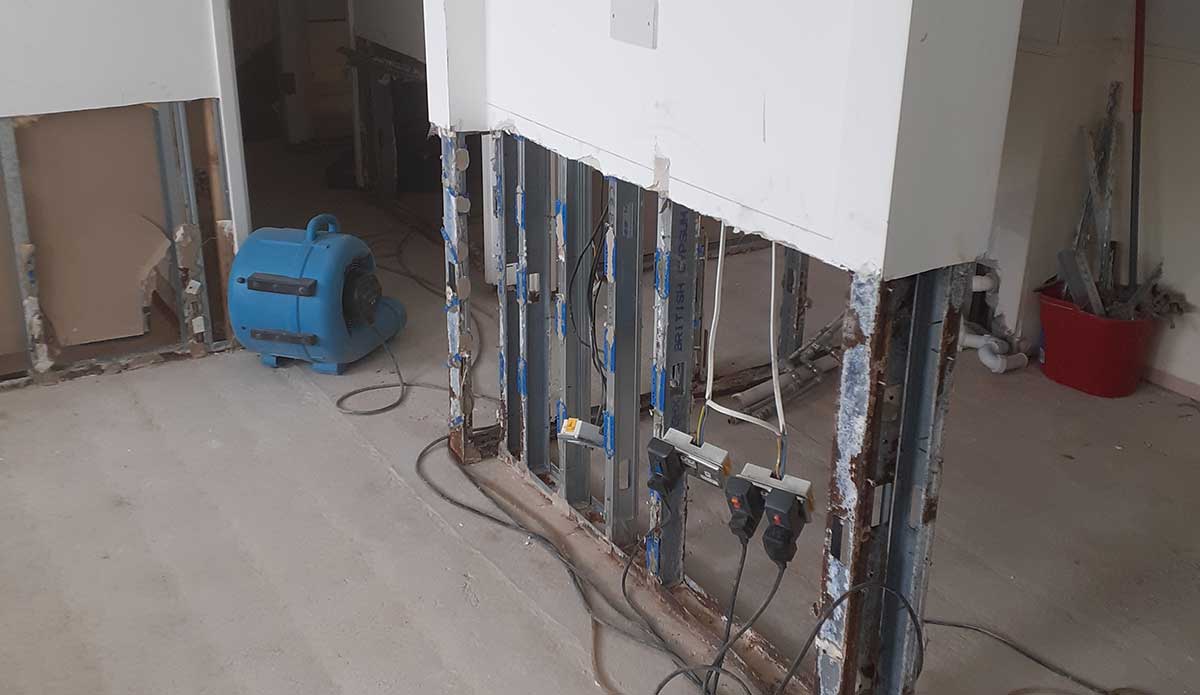
We use professional dehumidifiers, industrial air movers and moisture-monitoring equipment to create controlled drying conditions. Air movement helps encourage moisture to evaporate from affected surfaces, while dehumidification removes excess water vapour from the surrounding air.
The equipment selected and its positioning will depend on the affected materials, room dimensions, moisture levels and the source of the water. Drying equipment may need to remain in place for a period of time while progress is monitored.
Moisture Monitoring
Moisture readings can be taken throughout the drying process to compare affected materials with suitable reference areas. Regular monitoring helps determine whether moisture levels are reducing and whether the drying arrangement needs to be adjusted.
Drying should continue until the affected materials have reached an acceptable moisture level for the property and construction type. This helps avoid stopping the process simply because surfaces appear dry.
Reducing Further Property Damage
Controlled drying may help reduce secondary damage such as peeling paint, damaged plaster, swollen timber, lifting flooring, loose tiles and deterioration of internal finishes. Starting the drying process promptly can also reduce the amount of time moisture remains within the building structure.
Where mould growth, sewage contamination or other potentially hazardous material is present, suitable cleaning, removal or specialist treatment may be required before or alongside the drying process.
Restoration After Drying
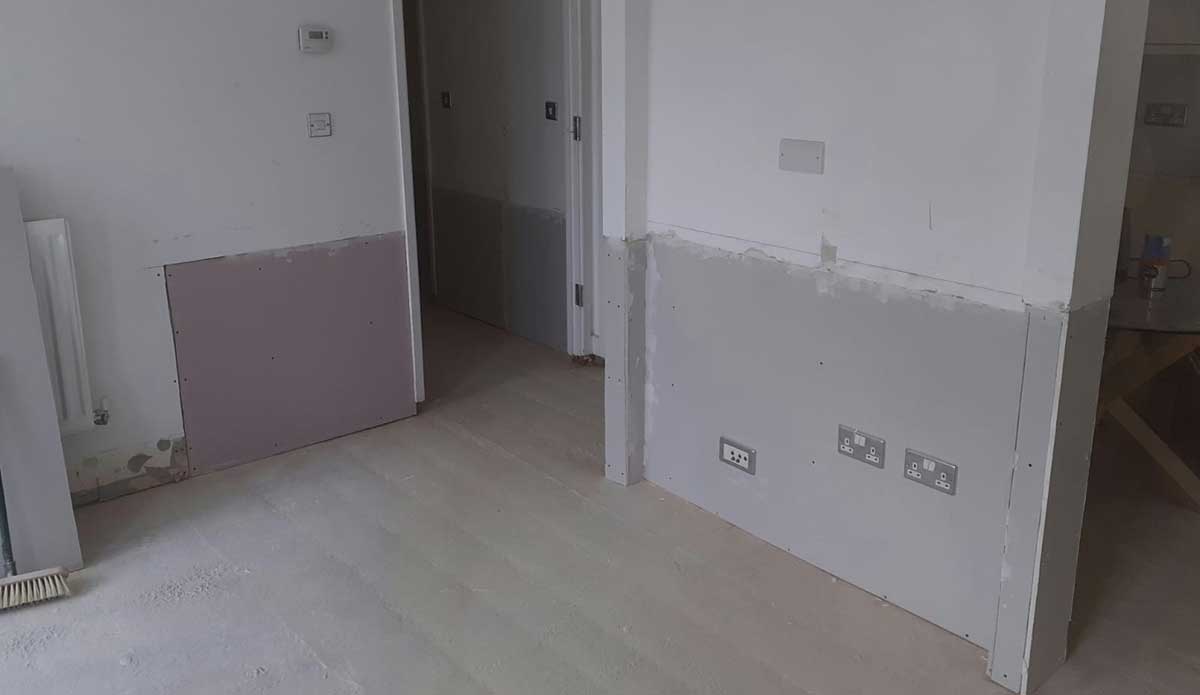
Once drying is complete, the affected areas can be assessed for any repair or restoration work that remains necessary. Depending on the damage, this may include replacing plasterboard, repairing plaster, redecorating surfaces or reinstating flooring and other finishes.
Leak Hunters UK can assess the affected areas, recommend an appropriate drying approach and provide moisture readings to help monitor progress.
Contact Leak Hunters UK to arrange a property drying and restoration assessment.