
Flat Roof Testing Methods
- Testing methods include:
- Electronic leak detection
- Tracer gas testing
- Controlled dye testing
Professional Flat Roof Testing
Flat roofs and balconies can allow water to enter through small defects in membranes, joints, outlets and surrounding details. We use a combination of electronic leak detection, tracer gas and controlled dye testing to investigate suspected areas of water ingress.
Investigating Flat Roof Water Ingress
Water entering through a flat roof or balcony can damage ceilings, walls, insulation and internal finishes. Persistent moisture may also contribute to mould growth and poor indoor conditions if the underlying cause is not identified and addressed.
Finding the entry point can be difficult because water may travel beneath the roof covering or through the building structure before becoming visible inside the property. Leak Hunters UK uses specialist testing methods to help identify likely defects and narrow down the areas where repair work may be required.
Flat Roof Testing Methods We Use
Dye Testing
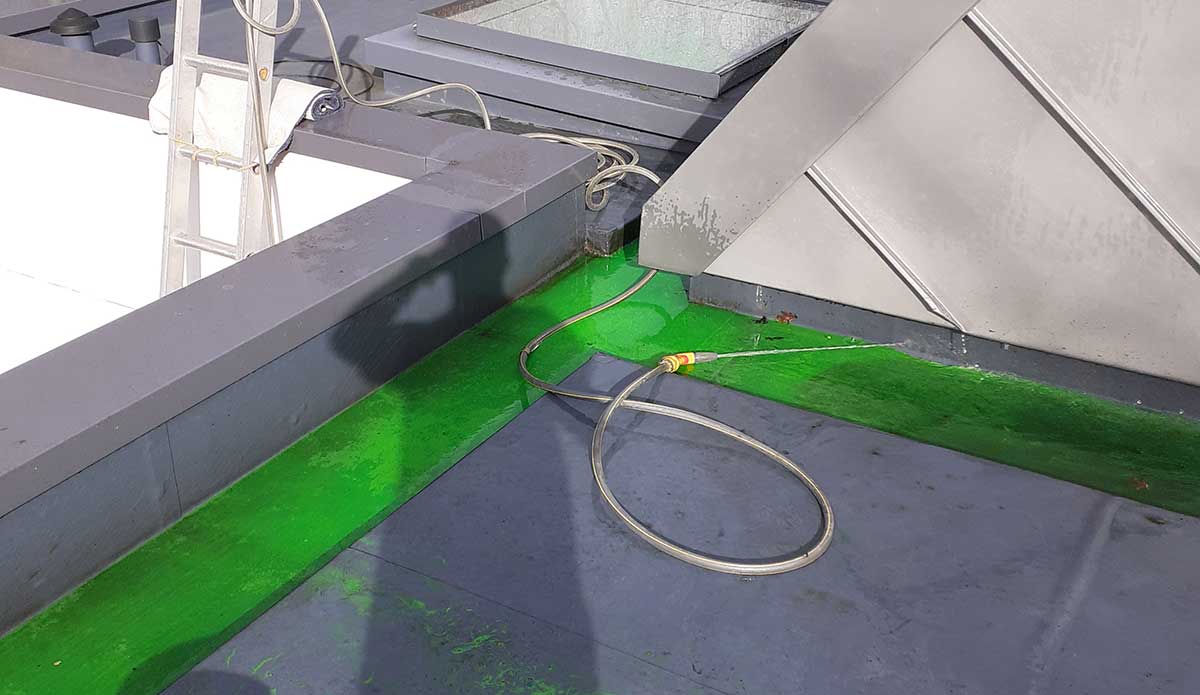
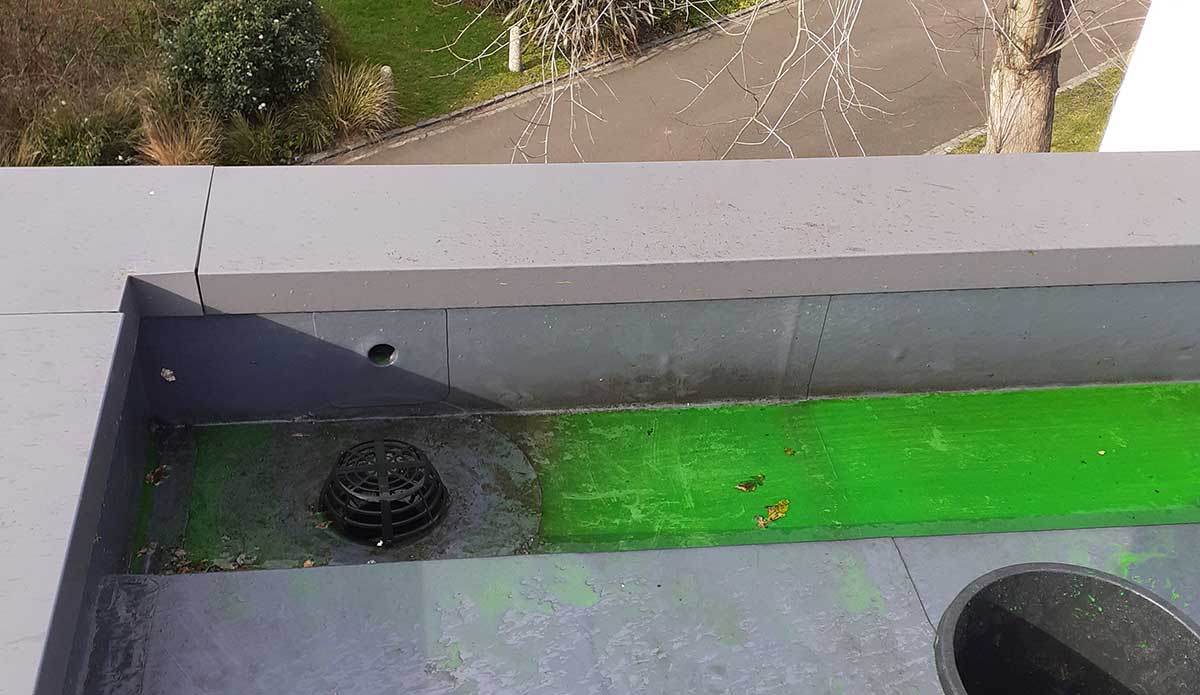
Dye testing is a controlled method used to investigate suspected leak paths on flat roofs, balconies, outlets and drainage details. Coloured water is carefully applied to selected test areas while the inside of the property is monitored for corresponding signs of water entry.
Different dye colours can be used when several areas need to be assessed separately. Dye testing must be carried out in a controlled sequence so that the source of any coloured water found inside can be identified accurately.
Tracer Gas Testing
Tracer gas testing can help investigate concealed leak paths within certain flat roof and balcony constructions. Where the roof build-up and access conditions are suitable, a section of the affected area is isolated and tracer gas is introduced beneath or within the relevant layer.
Our technicians then use specialist detection equipment across the external roof surface to identify where the gas may be escaping. A detected concentration can help narrow down the likely location of a membrane defect or route of water ingress.
Electronic Leak Detection
Electronic leak detection can be used to identify small defects within compatible waterproof roofing membranes. The test uses a controlled electrical field to detect areas where the waterproof layer may have been breached.
Depending on the membrane type, roof construction and site conditions, either wet or dry electronic testing may be appropriate. The suitability of electronic leak detection is assessed before testing because some conductive membranes, coverings and roof build-ups may require an alternative investigation method.
Choosing the Appropriate Test
No single testing method is suitable for every flat roof. The most appropriate approach depends on the roof covering, construction, access, weather conditions and the location of the internal water damage.
In some cases, more than one method may be used to compare findings and improve confidence in the suspected leak location. Any marked test area should be considered alongside the overall condition of the roof before repair work is planned.
Call Leak Hunters UK on 03335 772 552 to discuss flat roof or balcony leak testing.